Transforming The Dental Lab Workflow With Harvest Nano Zirconia
How polished nano zirconia supports “open-the-box, seat-the-crown” predictability—without sacrificing speed or margins
Every clinician wants the same outcome: a crown that seats quickly, looks natural, and doesn’t require a second appointment. And every lab wants the same thing for their doctors: a restoration that shows up on time, fits with minimal adjustment, and protects patient health.
In a recent conversation, Jay Collins of The Dental Lab and Harvest’s team broke down what they see as the “Big Three” for predictable restorative success:
- On-time delivery
- Minimal chairside adjustment (contacts and occlusion)
- A healthy, clinically sound restoration (margins and tissue response)
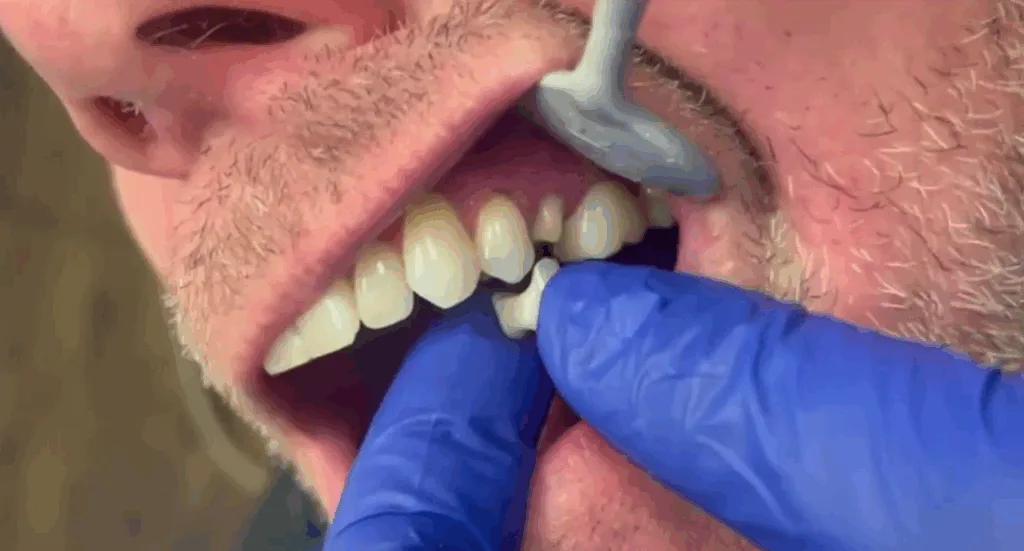
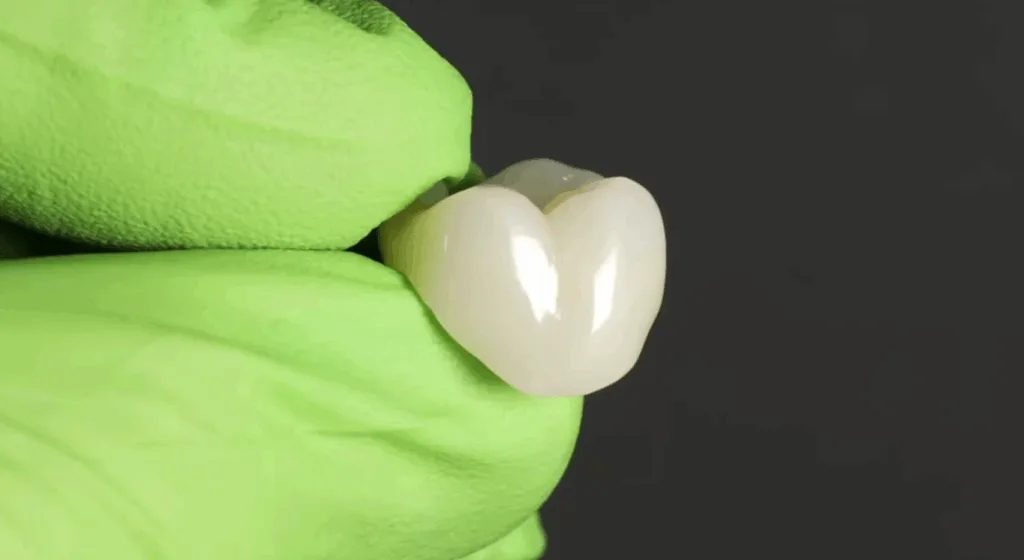
The goal is simple: a crown that practically “jumps out of the box into the patient’s mouth.” When seat time consistently stays under 10 minutes, everyone wins—patients, clinicians, and the lab.
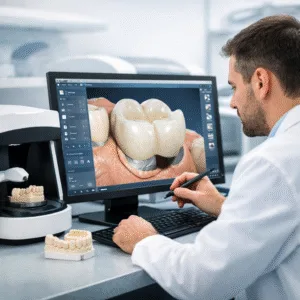
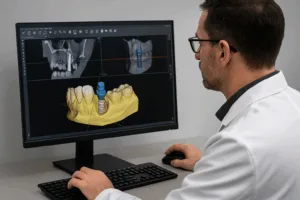
This level of detail ensures fewer mid-case adjustments and a more seamless transition from planning to execution. For labs, the consistency of digital files allows for restorations that align precisely with the clinician’s esthetic and functional goals.
Why Most Crown Problems Aren’t “One Thing”—They’re Error Stacking
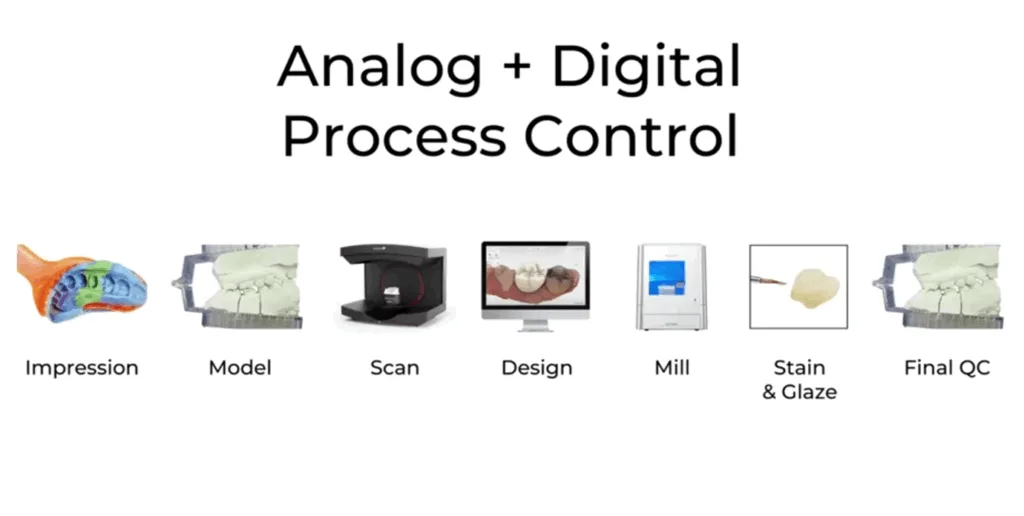
When something goes wrong—open contacts, heavy occlusion, bulky margins—the instinct is to fix the last step. But in reality, small inaccuracies build across the entire process. That’s what we call error stacking:
- Impression variability
- Model pouring variability (humidity, ratios, technique)
- Scanning and design inputs
- Manufacturing steps
- Model fitting and finishing
- Glaze thickness
- Human “tweaks” at the bench
Individually, each step may only introduce a small deviation. But compounded over time, it becomes significant—and even a fraction of a millimeter is a mile in the mouth.
Even worse: the more steps you have, the harder troubleshooting becomes. If a doctor reports open contacts, are we diagnosing the impression? The model? The scan? The design? The mill? The glaze? The printed model? The finishing handpiece?
The more “moving parts,” the harder it is to hit a predictable target.
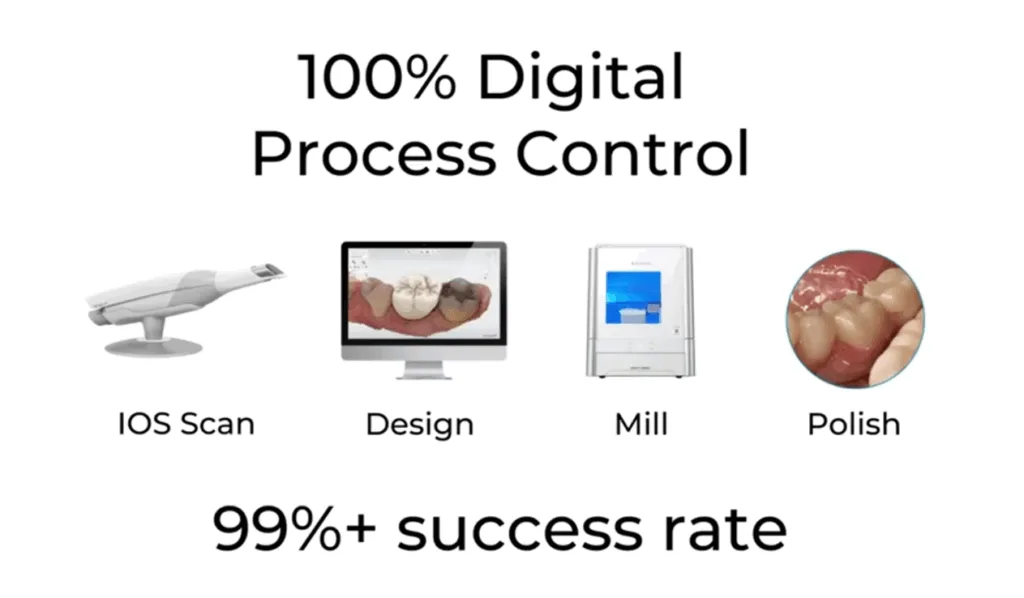
The Fastest Way to Improve Predictability: Delete Steps
If you want more consistent outcomes, the solution isn’t always to “try harder.” It’s to simplify the system.
Jay put it plainly: digital scanning cuts days out of transit and removes multiple points of inconsistency. The lab has seen a steady shift toward IOS scanning, and the trend will continue as scanners improve.
But even after a case becomes digital, many labs still keep analog habits alive—especially around models.
Do We Really Need 3D Printed Models for Monolithic Zirconia?
One of the biggest workflow shifts discussed was moving toward a model-free workflow for monolithic, full-contour zirconia—particularly when using polished nano zirconia.
Why? Because 3D printed models often introduce more variability than they remove.
In the conversation, a comparison was made between milling accuracy and printing variability:
- Milling accuracy (well-calibrated): roughly 5–15 microns
- 3D printed model variability: roughly 40–80 microns
- Glaze layer thickness: can add 30–50 microns
When your restoration is milled extremely precisely, and you then “verify” it on a less accurate model—plus add glaze thickness—your workflow can drift away from the original design intent.
And then there’s a reality every lab owner understands: technicians are craftsmen. Many can’t resist “improving” contours or contacts with a handpiece—even if the design is already correct. That human element can unintentionally introduce inconsistency.
For monolithic zirconia, the conclusion was direct: a model can become a liability, not a safety net.
Why Polished Zirconia Is More Than a Look—It’s Clinical
Some clinicians still assume glaze is the safest or most “finished” surface. But polished zirconia has strong clinical support, especially related to opposing wear.
The discussion referenced published research (including work frequently cited by Dr. Marcus Blatz, University of Pennsylvania) indicating that polished monolithic zirconia tends to cause less wear to opposing dentition than glazed zirconia.
In other words: polished zirconia isn’t new or experimental. In many cases, it aligns with how zirconia manufacturers recommend restorations be finished—yet many labs still rely on stain-and-glaze as a default.
What Makes Nano Zirconia Different?
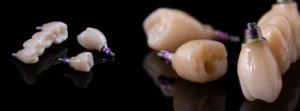
Not all zirconia is the same—even when it’s clinically acceptable. What stood out in this conversation was the manufacturing efficiency and finish quality that nano zirconia enables.
1) Smaller particle size = smoother polish
A high-resolution microscope comparison highlighted the practical reality:
- Smaller zirconia particles allow a smoother, more glass-like surface
- Larger particles can polish, but typically show more texture and variability
2) Manufacturing approach impacts consistency
Traditional isostatic-pressed zirconia uses binders that burn out during manufacturing, leaving micro-gaps that must close during sintering—introducing potential for shrinkage variability and warpage if heating/cooling isn’t perfectly controlled.
The Harvest nano zirconia process described a different approach (liquid deposition without binders), supporting a tighter, more uniform disc structure and a lower shrinkage profile.
3) Better milling behavior and margin definition
When milling, you’re not “cutting zirconia like a solid block”—you’re effectively ejecting particles. Smaller particles and higher density can improve the ability to create cleaner, more defined margins with fewer chips.
The real-world benefit? The potential for thinner, more consistent margins straight out of the mill—without aggressive hand finishing.
And margins matter: thick margins can compromise tissue health and lead to inflammation, especially if a material requires a minimum thickness that forces bulky geometry.
The Business Case: Speed, Yield, and Scalability
Labs today are under pressure from every direction:
- More demand
- Fewer trained technicians entering the field
- Higher expectations from clinicians who are more educated about digital workflows
- Faster turnaround requirements
This is where workflow and material choices become strategic.
In the conversation, Harvest nano zirconia was positioned as a tool that helps labs balance two forces that usually fight each other: perfection and scalability.
Benefits highlighted included:
- Faster milling behavior
- Shorter sintering cycles
- Improved yield per disc (reported as meaningful unit gains)
- Better efficiency for full-arch applications
- Reduced “last-minute chaos” cases that force compromises
Because every lab has lived the nightmare: the case that chips is always the one due tomorrow for the patient leaving for a major trip.
The Goal: Predictable Crowns, Faster Turnaround, Better Tissue Response
At the end of the day, this is what matters:
- Crowns that seat quickly (target: under 10 minutes)
- Crowns that arrive on time
- Crowns that require minimal adjustment
- Crowns with thin, consistent margins for better tissue adaptation
- A simplified workflow that reduces error stacking and troubleshooting time
That’s the promise of a polished, model-free nano zirconia approach: fewer steps, fewer variables, and a more consistent outcome.
Want to Learn More or Implement This Workflow?
If you’re a clinician wanting faster seat times and fewer adjustment headaches—or a lab evaluating how to modernize manufacturing while protecting quality—this workflow is worth exploring.
If you need us, text is the fastest way to reach us.
(And yes—we answer.) (215) 293-9760
To learn more, check out our owner, Jay Collins, on YouTube talking about how to transform your lab with Harvest Nano Zirconia: https://youtu.be/8rRpC2ugH6I