Lab Buyer’s Playbook: What Really Determines the Value of a Dental Lab
Buying or selling a dental laboratory is rarely just a financial transaction. It’s personal. For most lab owners, the business represents decades of sacrifice, long hours, missed family events, and deep relationships with employees and doctors. That emotional investment is exactly what makes lab transactions complex—and why many owners misunderstand what truly drives value.
This Lab Buyer’s Playbook breaks down the realities behind lab acquisitions, valuation, and growth, based on firsthand experience working on both sides of the table.
Debt Structure Matters More Than You Think
One of the biggest misconceptions in lab ownership is that debt is inherently bad. In reality, the right debt structure is often what makes a deal possible.
Banks don’t lend based on sentiment—they lend based on security. When debt is structured properly and tied to tangible assets like real estate, it becomes leverage. Clean up the building, build equity, and refinancing opportunities follow. In many cases, real estate becomes the stabilizing asset that allows buyers to restructure seller notes, refinance after a few years, and unlock liquidity without crippling cash flow.
Smart buyers understand how to use debt strategically—not recklessly—to create long-term value.
Fair Business, Great Price vs. Great Business, Fair Price
There’s a question every buyer has to answer:
Would you rather buy a fair business at a great price, or a great business at a fair price?
For many experienced operators, the answer is the former. Why? Because most dental labs suffer from the same fixable problems—regardless of geography. Inefficient systems, inconsistent production standards, outdated growth strategies. These aren’t fatal flaws; they’re repairable.
In that sense, buying a lab often isn’t about perfection. It’s about recognizing potential and knowing how to fix what’s broken.
The Technician-Centric Trap
Dental labs are built by technicians—and that’s both their greatest strength and their biggest vulnerability.
Good technicians are hard to find. Great ones are even harder. Over time, lab owners form deep bonds with their teams, and understandably so. But when loyalty overrides accountability, profitability suffers.
A common pattern emerges:
- Work volume drops
- Productivity expectations remain unchanged
- Owners “eat the cost” to avoid difficult decisions
- Profitability quietly erodes
The hard truth is this: a lab is a living organism. Profitability is its blood supply. Allowing inefficiency to drain that blood—even out of loyalty—puts the entire business at risk. Caring about people and running a healthy business are not opposites, but they do require balance.
Growth Is a System, Not a Product Mix
When evaluating a lab, sophisticated buyers don’t ask, “What prosthetics do you do most?”
They ask:
- Do you have a repeatable growth process?
- Are you consistently educating doctors?
- Are you developing your employees—or recycling the same year of experience over and over?
The most successful labs aren’t just good producers. They’re good educators. Their websites are current. Their CE efforts are intentional. Their teams are growing, not stagnating.
Growth that relies solely on the owner’s relationships or technical skill is fragile. Growth driven by systems is scalable.
Revenue Is Not Value—EBITDA Is
One of the most painful realizations for lab owners comes when they first hear this:
“Your lab is not worth what it makes in revenue.”
Private equity, investors, and strategic buyers focus on EBITDA, not gross revenue. A $3 million lab with weak margins, owner dependency, and no systems is far less valuable than a smaller lab with strong profitability and operational discipline.
High multiples are rare in the dental lab space—and reserved for labs with scale, systems, and strong leadership beyond the owner.
Cash vs. Value: The Tradeoff Every Seller Faces
Another critical question every seller must answer:
Do you want cash, or do you want value?
More cash upfront almost always means a lower valuation. Retaining equity, staying involved, or tying part of the deal to performance metrics can increase total value—but introduces risk.
This isn’t a decision to make lightly. It often requires conversations with spouses, attorneys, and financial advisors. There is no universal right answer—only what aligns with your goals, timeline, and risk tolerance.
Legacy Is Not a Soft Question
Serious buyers ask uncomfortable questions:
- Do you want to stay involved?
- How dependent is the lab on you personally?
- If you stepped away for six months, would the business grow—or stall?
If a lab collapses without its owner, it isn’t a business—it’s a high-paying job. Systems, leadership layers, and documented processes are what turn technical skill into transferable value.
Legacy matters. Most owners don’t want to sell to someone who will dismantle what they built overnight. But preserving legacy requires structure, not just intention.
Timing the Exit
Many lab owners sell too late—not because their labs are bad, but because they wait until growth plateaus or declines. Value is highest on the way up, not after burnout sets in.
Emotionally, it’s hard to step away when things are going well. Financially, that’s often the smartest time to consider options.
The Bottom Line
Buying and selling dental labs is not about quick wins or flashy numbers. It’s about:
- Systems over sentiment
- Process over personality
- Sustainable profitability over raw revenue
- Value creation over short-term cash
The labs that command the strongest outcomes—whether selling, acquiring, or scaling—are the ones built to function beyond their founders.
That’s the real playbook.
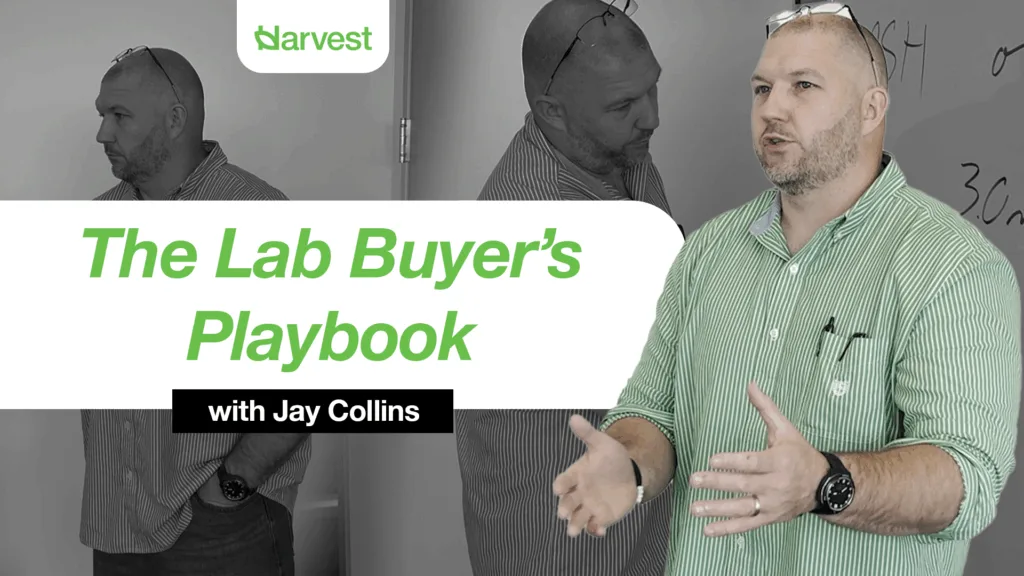
To see the full interview where the owner of The Dental Lab, Jay Collins, digs into this, check out our YouTube video at https://youtu.be/Q2CSCVI_F_A