What Are Dental Veneers?
Cosmetic dentistry treatments offer patients many benefits including improved appearance, oral health, and self-esteem. One of the most popular procedures today is getting dental veneers.
Dental veneers are custom-made restorations that are bonded to the front surface of teeth. Mostly for cosmetic purposes, veneers serve to improve the appearance, shape, size, or color of teeth. However, veneers can also help to change the bite or aid in function for some patients. Ultimately, they are considered to be an elective cosmetic dental procedure, rather than medically necessary.
When to get Dental Veneers
There are many reasons why a patient may choose to use veneers. Compared to dental crowns, veneers are relatively conservative and minimally invasive. They require less enamel removal than the latter, and serve as a quick and efficient way to improve smiles. According to Dr. Nandita Lilly of NewMouth, about 26 percent of dental cosmetic procedures are veneers. Some indications include:
- Discolored or stained teeth;
- Worn teeth;
- Chipped, cracked, or broken teeth;
- Misaligned, uneven, misshapen teeth;
- Teeth with craters or bulges;
- Gapped teeth.
Types of Veneers
There are two main types of dental veneers: porcelain and composite.
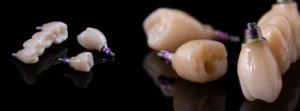
Porcelain veneers are natural-looking wafer-thin shells that are fabricated by a dental lab. They can be created from a variety of porcelain materials, such as lithium disilicate, zirconia, and feldspathic porcelain. In the hands of a dental technician, the veneers can be layered with different shades to seamlessly blend in with the natural dentition. However, zirconia veneers are difficult to bond because they cannot be etched. With proper care, porcelain veneers can last 10 to 15 years.
On the other hand, composite veneers are created with tooth-colored resin that the dentist can sculpt directly on the tooth or indirectly. Indirect composite veneers are not sculpted inside the mouth, but are later applied to the teeth with a layer of adhesive. On average, composite veneers can last 4 to 8 years.
Dental Veneer Procedure
The typical procedure for getting veneers created and cemented is quick and simple. Depending on the type of veneer, the process varies slightly.
Porcelain Veneer Procedure:
- The dentist grinds down the tooth to remove some enamel.
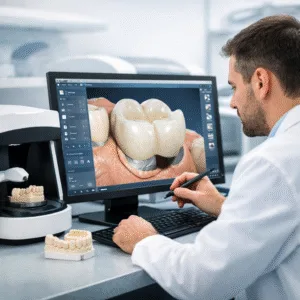
- An impression of the mouth or an intraoral scan is taken for a physical mold to be created and sent to the dental lab.
- A skilled dental technician will fabricate the porcelain veneer based on the impression mold. The dentist and patient will select the optimum tooth shade for the technician to use.
- The dentist receives back the veneer for placement and cementation. During the time in between, temporary veneers may be used.
Direct Composite Veneer Procedure:
- The dentist etches the surface of the tooth before applying thin layers of bonding resin, using a curing light to harden and seal each layer.
- The dentist polishes off the tooth to finish.
- The procedure is usually done in a single visit.
Indirect Composite Veneer Procedure:
- The dentist prepares the tooth by removing some enamel and creating an impression mold of the teeth.
- The veneer is made out of composite resin material based on the mold. This step is usually done by a lab, but a dentist can perform as well.
- At the next visit, the dentist etches the patient’s tooth and applies an adhesive material to bond the veneer to the tooth.
Following placement of veneers, the dentist will assess the bite and appearance of the teeth. Patients can return to normal activities on the same day, and eating and drinking can be continued immediately after the appointment.
How to Care for Veneers
To make veneers last, it is important to avoid putting too much pressure on them. For anterior teeth, this means avoiding biting directly into hard foods, and using the back teeth instead.
As for staining, porcelain veneers are highly resistant, with composite veneers being slightly less resistant. However, both materials are less susceptible to stains than natural teeth. Dark colored-foods and beverages are still recommended to be avoided to help maintain the original color.
Lastly, it is always important to maintain dental hygiene through brushing, flossing, and regular visits with the dentist.
How Much Do Veneers Cost?
Depending on the type of veneer and the material chosen, costs can vary per tooth. Typically, porcelain veneers range from $500-$2,500 per tooth, while composite veneers are $250-$1,500. However, because they are considered to be cosmetic, insurance does not cover the cost of veneers.
Side Effects and Risks of Veneers
Common conditions and side effects of veneers may include tooth sensitivity, damage to the dentin, poor fit, and veneer failure.
Sensitivity to the teeth is common after placement. The sensitivity typically lasts during the first three weeks. If pain occurs any longer, there may be an underlying cause, such as damage to the dentin. Dentin is vulnerable to damage during the enamel removal process, but this risk is less common. Some examples include tooth sensitivity, bruxism, or jaw pain. Lastly, patients with untreated underlying conditions, like erosion are at higher risk of veneer failure. Veneers may have to be removed or replaced in the future for cases as such.
Dental Laboratories Near Me
Our lab is located in Bristol, PA, but is available to the entire nation. With our excellent shipping services, our products can arrive in a few days–no matter where you are. We are always a “dental lab near me.”
The Dental Lab offers veneers in a multitude of materials including lithium disilicate, zirconia, and synthetic feldspar. Our variety of veneers cover a wide range of restorations that we can treat. Each provides an aesthetic and strong finish that is suitable for the case. Contact us today to get started on your veneers case.
Keywords:
The Dental Lab, Dental Lab, Dental, Dentist, Dentistry, Veneers, Porcelain, Porcelain Veneers, Composite Veneers, dental laboratories near me, dental lab near me, crown and bridge