Emax Lithium Disilicate
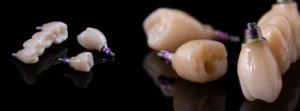
Today’s dental patients are investing in more than just function when it comes to their restorations. Now, aesthetics play a vital role in their choice of treatment. Due to the biocompatibility and the aesthetic ability of all-ceramic solutions, Emax lithium disilicate has been the material of choice for over 15 years to address a wide range of applications, including veneers, inlay, only, crowns, and bridges for anterior and posterior regions.
Emax lithium disilicate is a monolithic biocompatible glass-ceramic. The material is renowned for its high mechanical strength, fracture toughness, form, function, fit, and aesthetics. Its true-to-nature shade behavior and optimum light transmission combined with its resistance to fractures, chips, or cracks results in long-lasting and lifelike aesthetic restorations. In addition, it is an affordable alternative to zirconia and porcelain-fused-to-metal dental corrections.
Given their high flexural strength of 360 – 400 MPa, Emax restorations also offer flexible cementation options: adhesively, self-adhesively, or conventionally. The strength also enables very thin restorations to be fabricated without the risk of fracturing.
Prosthetics can be built as full-contour monolithic restorations without the need for veneering ceramic. For this reason, the preparation is minimally invasive, while maximizing the aesthetic and strength of metal-free restorations.
Emax comes in two forms: pressed and milled.
Pressed Emax Lithium Disilicate
This version of lithium disilicate is pressed through a three-step process:
– waxing up the restoration
– investing and burning out the wax
– pressing the material into the negative space in the wax
Pressing is the desirable production method as it enables the technician to get the full benefits of the material and produce several restorations in a single cycle. Pressed Emax has a fracture toughness of 2.75 MPa and a flexural strength of 470-500 MPa. Over ten years of clinical long-term success has documented the material to deliver a 97,8% survival rate. Moreover, Press ingots are available in seven different levels of translucency and opalescent Impulse shades.
Milled Emax Lithium Disilicate
On the other hand, milled Emax undergoes a milling process where the material is either cut or ground. Cutting uses burrs designed to carve away at the material in a predictable and precise fashion. On the other hand, grinding uses diamond burrs that sand and wear down the material to the desired shape. However, the diamond particles can cause unevenness and as the burrs are worn down, the accuracy is reduced further. According to the Journal of Dentistry, microcracks with depths of 40-60 microns were reported when using the grinding method.
Milled lithium disilicate is said to be among the world’s best glass ceramics. It is known for its versatility when it comes to applications, its comprehensive range of processing options, and its strength. Additionally, it is also available in multiple shades and translucencies.
Regarding fracture toughness and biaxial flexural strength, the toughness is 2.25 megapascals (MPa) and strength is 360-400 MPa. In addition, more than eight years of clinical use in an independent study by the Clinicians Report® found that milled Emax has a 95% survival rate. The 5% failure rate was caused by breakdown in cementation, but not in the lithium disilicate material itself.
Moreover, this material takes the shape of blue-colored blocks. The blocks undergo a two-step crystallization process, where they arrive at the lab partially crystallized, are milled, then undergo final crystallization. The result is shorter and smaller crystals that are less resistant to fractures and less strong.
Clinical Studies
Both pressed and milled materials have been used in clinical trials for over 10 years with success. A study by K. A. Malament found Emax materials to have a survival rate of 99.75% during a ten-year observation period. Not only that, but both lithium disilicate materials were also reported to have surpassed all the clinical practice requirements.
Over ten years of clinical studies have found that pressed Emax lithium disilicate performed better than conventional materials, such as glass or metal ceramics. It also outperformed its millable counterpart in terms of fracture toughness and biaxial flexural strength. The pressed material offers high levels of safety, survival, toughness, and strength. Six studies focused on a total of 499 restorations over the course of four years documented a survival rate of 98.4% and a fracture rate of 0.4%.
As for milled Emax, this material has also undergone over 10 years of ongoing quality testing and has proven clinical long-term success and scientifically documented results. The combination of fracture toughness and flexural strength is particularly desirable in minimally invasive dentistry. In terms of survival rate, an eight-year independent study by the Clinicians Report® documented a 95% survival rate with a 5% failure rate due to breakdown in cementation. However, there was no breakdown reported in the lithium disilicate material itself. Other clinical reports found milled lithium disilicate to deliver a 97.2% survival rate over a ten-year period.
Wide Range of Applications
The wide range of shades also grants flexibility when it comes to applications:
- Veneers
- Thin Veneers
- Occlusal Veneers
- Inlay/Onlay
- Partial crown
- Crowns in the anterior and posterior regions
- Bridges in the anterior and premolar regions
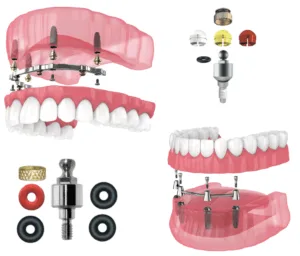
- Implant superstructures
- Hybrid abutments
- Abutment crowns
- Three-unit bridges up to the premolar region
Local Dental Labs
Dentists throughout Philadelphia and the surrounding region already turn to The Dental Lab for superior quality Emax crowns and other dental implants to restore their patients’ smiles. Our full-service dental lab offers lithium disilicate restorations through both options of milling and pressing. Contact us today to try Emax lithium disilicate today.
Keywords:
The Dental Lab, crown and bridge, emax crown, emax crowns, emax, lithium disilicate, emax lithium disilicate, local dental labs